Some of the links on this blog may be affiliate links. This means that if you make a purchase through these links, we may earn a small commission at no additional cost to you. We are a participant in the Amazon Services LLC Associates Program, an affiliate advertasing program designed to provide a means for us to earn advertising fees by linking to Amazon.com and affiliate websites.
Bali: The Island That Doesn’t Burn Out
Bali has a reputation for being magical. Visitors arrive jet-lagged and overwhelmed, and within a few days something shifts. The shoulders drop. The breath slows. People stop checking their phones every five minutes. It’s easy to dismiss this as “vacation effect” but what if it’s something deeper?
The Balinese don’t experience burnout the way Westerners do. Stress exists, of course but there’s a cultural architecture built around it that prevents the kind of chronic, existential exhaustion that has become an epidemic in modern life. And at the center of that architecture is a concept called Ngayah.
This article is about what “Ngayah” really means and how it works as a stress-relief system. We will tell you how you can create a Balinese wellness lifestyle with 10 easy rituals even if you’re nowhere near Bali. That includes 2 DIY recipes you can make this weekend and a curated guide to the best Balinese-inspired gifts that make this philosophy tangible for yourself or someone you love.
Table of Contents
What Is Ngayah? (And Why It's Not What You Think)
The word “ngayah” (pronounced nyah-YAH) is often translated as “voluntary communal work” or “service without expectation of reward.” But that translation misses the emotional core of the concept.
What is the “ngayah” meaning in Bali, exactly? “Ngayah” is the act of contributing to your community.
This can be preparing offerings for a ceremony, helping rebuild a neighbor’s wall, and cooking for a temple festival. All these acts are coming not out of obligation, but from a place of genuine devotion and belonging.
It is service as spiritual practice. Work as meditation. Effort as connection. And it forms the foundation of Balinese philosophy stress relief not a technique, but a way of being.
In Bali, “ngayah” is integrated into everyday life through the banjar, the rural community unit. Every family participates. There are no spectators. And this is exactly why it works as a stress-relief system: because it removes the two things that make modern stress so suffocating.
The first is isolation. The second is meaninglessness.
When you’re doing something with others, for something larger than yourself, the nervous system settles. The Balinese figured this out centuries ago. Modern neuroscience is just catching up.
What exactly characterizes Balinese wellness rituals?
Traditional Balinese wellness rituals are rooted in the concept of Tri Hita Karana. This is a life philosophy that promotes harmony with the gods, with other people, and with nature.
In the context of beauty treatments, this means using only what the earth provides. You will find no synthetic fragrances or aggressive chemical ingredients here. Instead, the stars are fresh plumeria flowers, coconut oil, turmeric, and sandalwood.
Balinese massage combines acupressure, reflexology, and gentle stroking, all aimed at unblocking the flow of energy. Incorporating these habits into your daily life is a wonderful way to reduce stress. That is why any gift that connects to this tradition makes a perfect relaxing present.
How do you create a Bali-style home spa step by step?
Creating the right atmosphere requires engaging all the senses.
🧘 Step by step guide
Clear the space – remove any objects from your bathroom that remind you of daily chores or obligations.
Set up warm lighting – turn off the main lights and replace them with the soft glow of candles or small lamps.
Prepare soothing scents – use a diffuser with lemongrass or ylang-ylang essential oils to set the mood.
Play relaxing sounds – play nature sounds or soft relaxation music in the background.
Use natural treatments – use Balinese beauty products to deeply nourish and pamper your skin.
Stay slow and mindful – keep the entire process slow and mindful, enjoying every single moment without rushing.
8 Balinese Wellness Lifestyle Habits You Can Easily Recreate
You don’t need a banjar to practice Ngayah. You need to understand its principles and then find ways to apply them to the texture of your daily life.
These Balinese lifestyle habits are not exotic or inaccessible. Most of them require no special equipment, no retreat booking, no flight to Denpasar. They require only attention and a willingness to slow down enough to actually practice them.
1. Contribute Without Keeping Score
In Ngayah, nobody tracks who did more. There are no ledgers of favors. This is radically different from how most modern relationships work at work, at home, even in friendships. The Balinese practice of giving without accounting creates a profound sense of lightness.
Try it for one week: do something for someone without mentioning it, without expecting anything, and notice how it changes your internal weather.
DIY Canang Sari
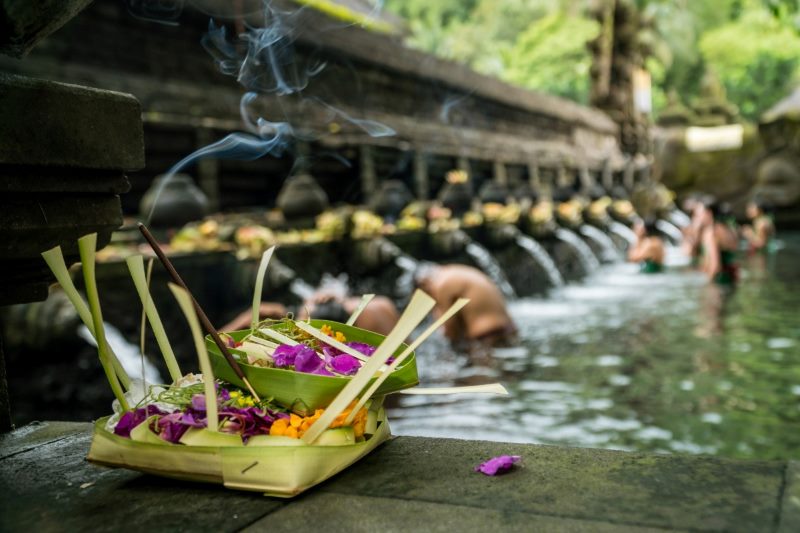
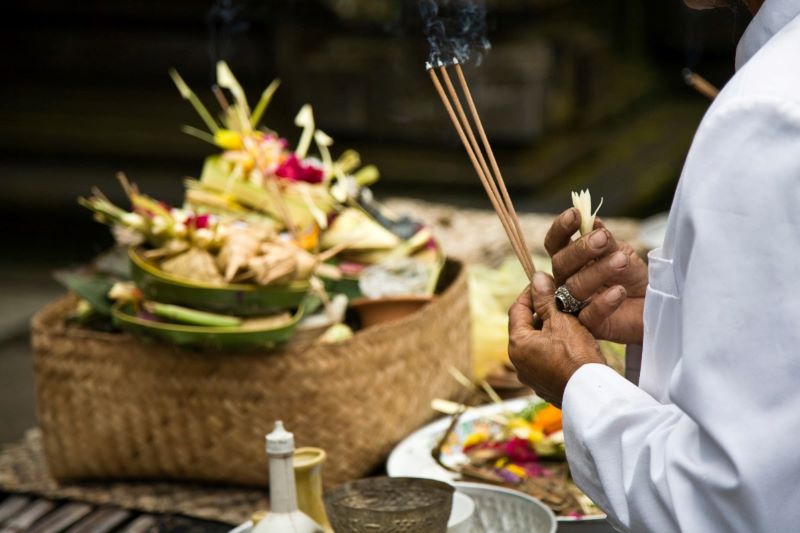
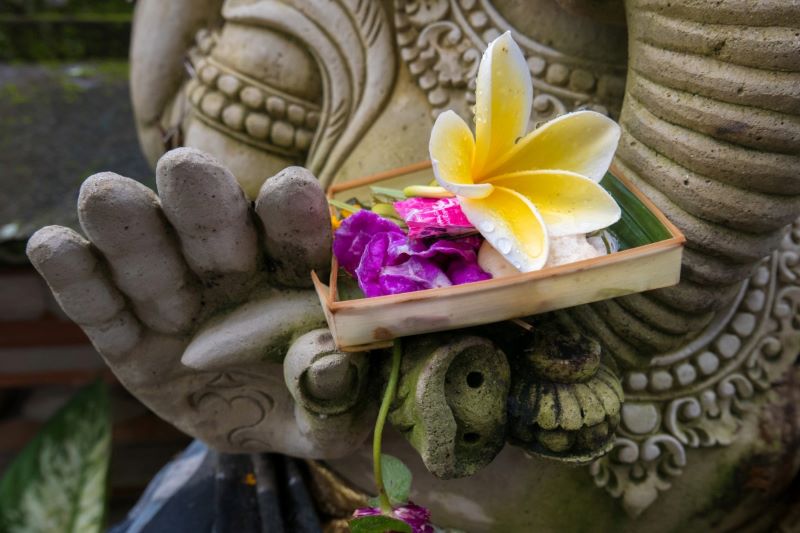
Every morning in Bali, women prepare “canang sari” which is a small woven palm-leaf offerings filled with flowers, incense, and a few grains of rice. They place them at doorways, shrines, and street corners.
This practice takes 10–20 minutes and is done in meditative silence. It is, essentially, a mindfulness ritual disguised as devotion. The act of making something beautiful with your hands, placing it with intention, and walking away without attachment is one of the most powerful stress-regulation tools that exist.
2. Schedule Your Weekly Reset
In Bali, ceremonies happen constantly, and they interrupt everything. Shops are closed and streets filled with processions. Many tourists from the Western countries find it frustrating. But there’s a genius idea in it: regular, non-negotiable interruptions to routine prevent the kind of relentless forward momentum that creates burnout.
Balinese ceremonies remind us that routines are meant to be interrupted occasionally. Regularly setting aside responsibilities is the best way to avoid stress. Create your own weekly ritual. Something that allows you to breathe and disconnect from the daily routine. It could be a long candlelit bath or an hour with a book and Balinese tea. The key is to make this time non-specific—it’s your personal “reset” button.
🎁 Balinese gift idea
A Balinese-style offering bowl or small tray beautiful on a sideboard or desk as a daily reminder to give without expectation. Look for hand-carved teak or silver versions from Balinese artisans.
- The flower-inspired design features five sizes with a beautiful gradient of color saturation
- Made from durable porcelain makes them safe for use in both the freezer and dishwasher
3. Eat Together Slowly Every Day
The Balinese table is not a refueling station. Meals are communal events where conversation flows, dishes are shared, and no one eats alone if it can be helped. Research on the world’s longest-living populations consistently shows that shared meals are one of the strongest predictors of both longevity and emotional well-being. The Balinese don’t need a study to tell them the truth; they simply live it.
4. Create Your Own Scent Memory
Anyone who has been to Bali remembers the smell: it’s a mix of frangipani, clove, and sandalwood. The smell is so pervasive that people who have visited often report feeling calmer just from a scent memory.
This is not accidental because the Balinese use aromatic plants as sensory anchors that signal safety to the nervous system. You can create the same effect at home by consistently using a specific scent during your most relaxed moments. It’s the easiest way to train your mind to let go of the day’s stress.
🎁 Balinese gift idea
A sandalwood or vetiver soy candle from an artisan maker, or a pure frangipani essential oil diffuser blend. This is one of the easiest and most affordable ways to bring Bali into any home and one of the most immediately effective.
- It includes a 100% natural blend of cold-pressed shea butter and frangipani essential oil for deep hydration
- It does soothe various skin conditions and damaged hair without leaving a greasy residue
5. Walk Slowly, Especially When You're Busy
There’s a particular pace to life in the villages of Bali that is almost disorienting to outsiders. Nobody rushes, but things still get done. The Balinese understand intuitively that urgency is often a mental state, not a physical requirement. Slowing your physical pace is one of the fastest ways to downregulate a stressed nervous system. It signals to your body that there is no emergency.
🎁 Balinese gift idea
A sandalwood or vetiver soy candle from an artisan maker, or a pure frangipani essential oil diffuser blend. This is one of the easiest and most affordable ways to bring Bali into any home and one of the most immediately effective.
- It includes pure and natural red sandalwood powder that effectively improve overall facial beauty
- It makes the skin appear younger and firmer by naturally tightening it
6. Maintain a Space That Is Only For Stillness
Every Balinese home has a family temple, such as a small outdoor space dedicated to offerings, prayer, and connection with ancestors. It is never used for storage, never repurposed for work, never invaded by screens.
Having a physical space that your nervous system associates exclusively with rest and reflection is enormously powerful. It doesn’t need to be a temple. A chair, a corner, a specific spot in your garden dedicate only for wellness rituals and relaxations.
🎁 Balinese gift idea
A Balinese meditation cushion (zafu) in natural cotton or linen, a small carved stone Buddha or Ganesh figure, or a simple teak side table for a candle and journal. The gift of a dedicated stillness corner is one of the most thoughtful things you can give.
- It includes a 100% natural buckwheat hull filling
- It does simplify maintenance through a removable and washable cover
7. Practice Tri Hita Karana — The Three Sources of Wellbeing
Balinese wisdom teaches that happiness comes from three balanced relationships: with nature, with others, and with your inner self. If you’re feeling chronically stressed, it’s usually a sign that one of these connections is out of sync. Which one is yours?
- Nature: When was the last time you spent time outdoors without “doing” anything? No running, no scrolling, just being present in the green.
- Community: When did you last feel a genuine, tech-free connection with your friends or neighbors?
- Self: Are you giving yourself space for silence and reflection that isn’t tied to being productive?
Don’t see these as spiritual mysteries see them as a diagnostic tool for your mental health.
8. End Each Day With Gratitude But Make It Specific
Balinese evening prayers often include an element of acknowledgment of what was given, what was received, and what was completed. Not a vague “I’m grateful for my life” but a specific naming of things: the neighbor who brought papaya, the rain that came at the right moment, the child who laughed at dinner.
Being specific is what defines gratitude as a neurological intervention rather than a wish. Your brain pays attention to every detail.
🎁 Balinese gift idea
A beautifully bound gratitude journal that feels special enough to write in every night. Pair it with a good pen and a small candle for the ritual. Under $40 total and genuinely life-changing with consistent use.
- It includes simple, science-backed prompts that help build a positive mindset in just five minutes a day
- Simple prompts help beginners stick to a daily writing routine
DIY: Two Balinese-Inspired Stress Relief Recipes to Make at Home
These recipes are inspired by ingredients commonly used in Balinese traditional healing: jamu tonics, floral baths, and aromatic body treatments. They’re simple, effective, and easy to make.
🌿 Recipe 1: Balinese Jamu Golden Calm Tonic
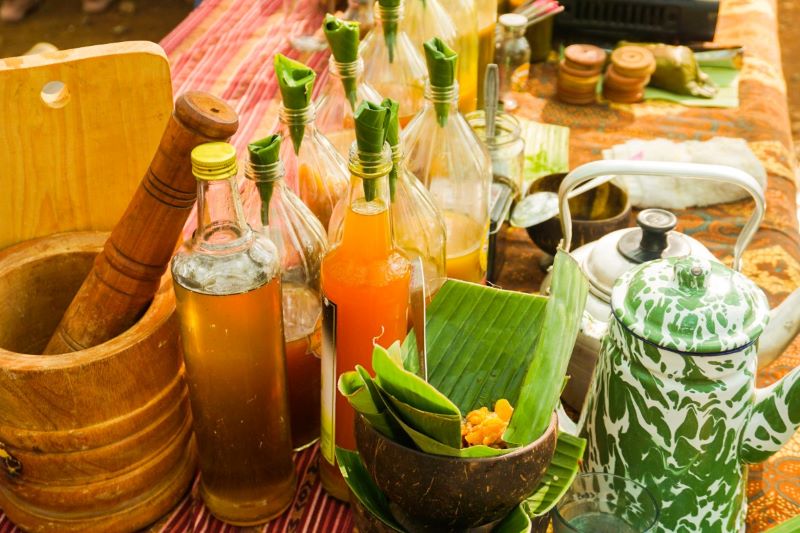
Jamu is an ancient Indonesian herbal medicine system. In Bali, women often drink jamu in the morning to regulate digestion, reduce inflammation, and calm the nervous system. This version focuses on stress relief.
DIY Balinese Jamu Golden Calm Tonic
Ingredients:
- 1 thumb-sized piece of fresh turmeric (or 1 tsp turmeric powder)
- 1 thumb-sized piece of fresh ginger
- 1 stalk fresh lemongrass, bruised
- 1 tsp raw honey
- Juice of half a lime
- A pinch of black pepper (activates the curcumin in turmeric)
- 400ml water
- Optional: 3–4 fresh kaffir lime leaves
Instructions:
- Peel and roughly chop the turmeric and ginger.
- Bring water to a gentle boil, add turmeric, ginger, lemongrass (and kaffir lime leaves if using).
- Simmer on low heat for 15 minutes. Your kitchen will smell incredible.
- Strain into two cups or a glass jar.
- Add lime juice, honey, and a pinch of black pepper.
- Drink warm, slowly, ideally in silence or with soft music. This is part of the ritual.
It’s best to drink it in the morning on an empty stomach, or in the late afternoon as a transition ritual between work and evening. Studies show thqt the lemongrass alone cqn reduce anxiety markers significantly.
🌿 Recipe 2: Frangipani & Coconut Oil Evening Body Ritual
In traditional Balinese healing, the body is treated as a temple. Evening body care is not vanity but it is an act of respect for the vessel you inhabit. This oil ritual is designed to be done slowly, with attention, for 10–15 minutes before bed.
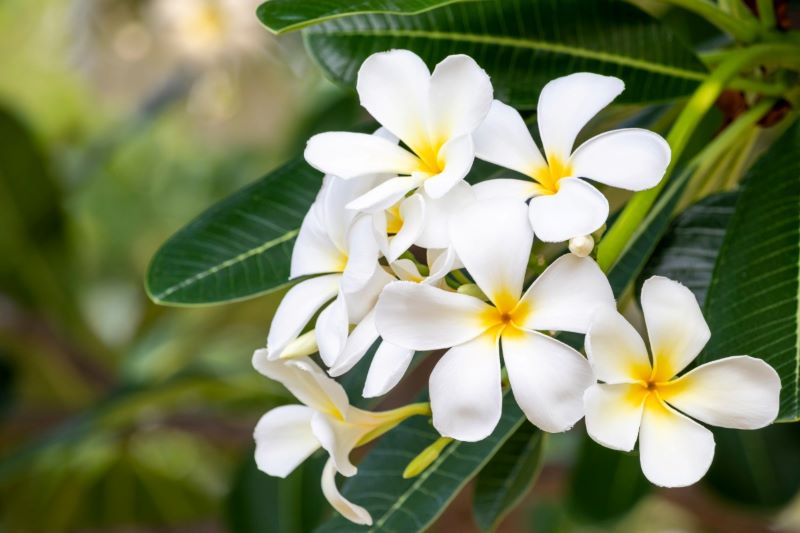
The blend of vetiver and sandalwood does more than just smell good. It directly signals your nervous system to switch into “rest and digest” mode. In Bali, the sacred frangipani flower is used for more than its beauty. Its scent is scientifically shown to lower cortisol levels and melt away stress. This isn’t just a modern wellness trend, but a 3,000-year-old technology designed to ground your mind and body.
DIY Balinese Jamu Golden Calm Tonic
Ingredients:
- 4 tbsp virgin coconut oil (warm it slightly so it’s liquid)
- 6–8 drops frangipani essential oil (or ylang ylang as an alternative)
- 3 drops sandalwood essential oil
- 2 drops vetiver essential oil (deeply grounding, reduces anxiety)
- 1 drop clove essential oil (optional, it’s warming and anti-inflammatory)
Instructions:
- Mix all oils in a small glass bowl or jar.
- Before applying, take three slow breaths inhale for four counts, hold for four, exhale for six.
- Apply with slow, circular upward strokes starting from your feet, moving toward your heart.
- Spend extra time on your neck and shoulders, especially if they are very tight.
- Don’t rinse off. Put on soft clothing and avoid screens for at least 30 minutes.
The Ultimate Balinese Zen Gift Guide: 12 Finds Under $50
Whether you’re shopping for someone who needs a serious reset, or building your own home sanctuary one beautiful object at a time these are the gifts that bring Ngayah philosophy to life. Each one has a purpose rooted in the Balinese rituals above.
For the Morning Ritual
• Balinese pandan or frangipani incense sticks + a brass incense holder the simplest and most transportive way to start the day with intention. Look for hand-rolled Balinese incense from small producers on Etsy rather than mass-market brands. ($10–20).
• A jamu spice kit turmeric, lemongrass, ginger, and kaffir lime in a beautiful box with recipe cards. Several wellness brands now sell these as curated sets. Perfect paired with the recipe in this article. ($20–35).
• A ceramic pour-over coffee or tea set in earthy, natural tones — for anyone whose morning ritual deserves a beautiful vessel. The Balinese understand that the object matters as much as the practice. ($25–45).
- It makes the skin feel smooth using a royal Indonesian beauty method often found in Bali spas
- Traditional Balinese body scrub made from bengkoang
- It makes hair appear softer by providing essential nourishment to the roots and scalp
- It helps soothe and refresh the skin for a calmer complexion
- High-quality white magnolia botanicals ensure a premium and authentic aromatherapy experience
For the Home Sanctuary
• A hand-carved teak offering bowl gorgeous as a catch-all on a sideboard, a jewelry dish, or a fruit bowl. Every time you see it, it’s a small reminder of the Ngayah principle: beauty created for giving, not keeping. ($15–35).
• A Balinese meditation cushion in natural linen or cotton for anyone trying to build a sitting practice or simply create a corner of their home that belongs to stillness. ($30–50).
• A small carved stone or resin figure a Ganesh, a seated Buddha, or a traditional Balinese dancer. Not as religious iconography but as a visual anchor for a sanctuary space. ($15–40).
• A woven rattan tray or serving set for the communal table ritual. Balinese rattan work is extraordinarily beautiful and durable. Available from fair-trade home goods stores and directly from Balinese artisans online. ($20–45).
- It includes sliding extenders and non-slip grips to ensure a secure fit for almost any bathtub size
- Sturdy lacquer-coated bamboo construction that resits water damage
For the Evening Ritual
• Vetiver essential oil is deeply grounding, immediately calming, and the most ‘Balinese’ scent outside of frangipani itself. A 10ml bottle lasts months used in the body oil recipe above. ($12–25).
• Virgin coconut oil in a beautiful glass jar the base of the evening body ritual, and endlessly versatile for hair, skin, and cooking. Choose cold-pressed, unrefined, from a small producer. ($15–30).
• A ylang ylang or sandalwood soy candle from an artisan maker for the wind-down hour. The difference between a mass-market candle and an artisan one made with real essential oils is enormous and immediately noticeable. ($20–40).
- It includes a set of 14 basalt stones and a specialized heater designed to stay warm for long periods
- It provides a safer experience with an integrated power switch
For the Person Who Needs the Full Reset
• A Balinese wellness box assemble one yourself: jamu spice kit + frangipani incense + vetiver oil + a small offering bowl + a handwritten note explaining the Ngayah philosophy. This is the kind of gift people keep and remember. ($50–70 total).
• A gratitude journal + a good pen + a small candle the evening ritual kit. Choose a journal that feels luxurious enough to actually use every night. Under $40 and more impactful than most things you could spend that money on. ($30–40).
- It includes 100% natural, hand-processed pandan leaves
- It does keep the natural smell and healthy nutrients by using careful sun-drying and clean grinding